

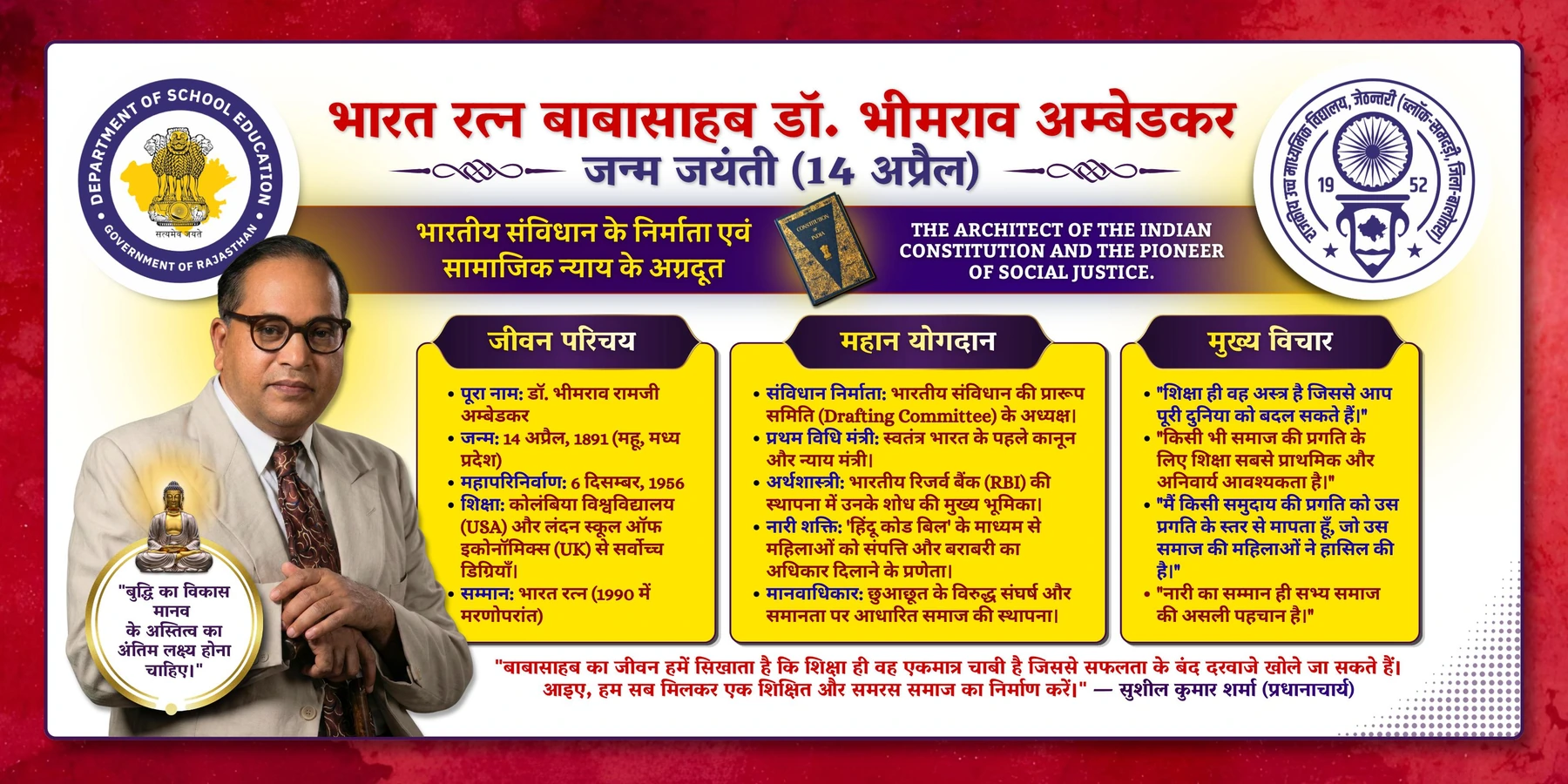
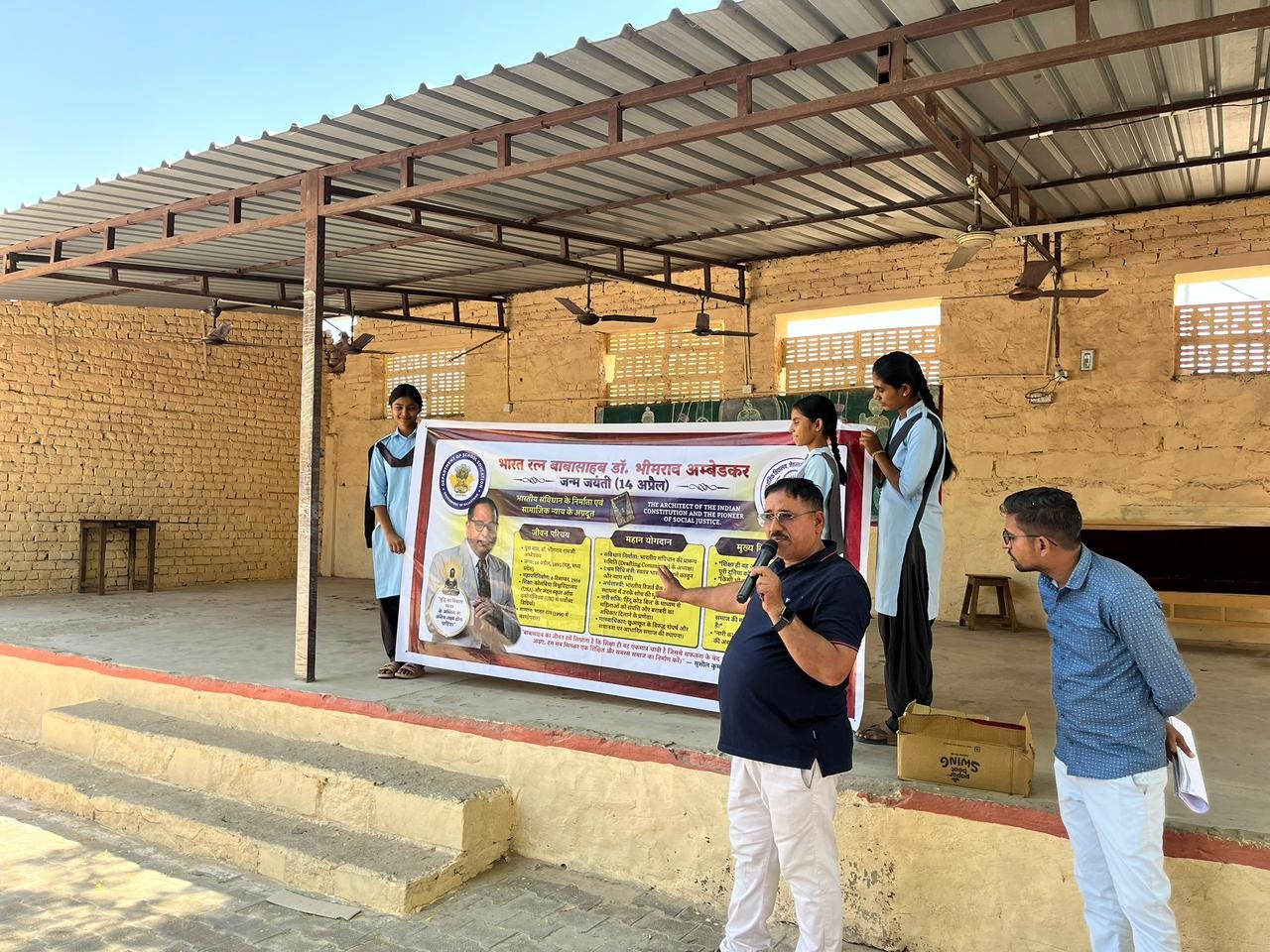
14 अप्रैल 2026 — राजकीय उच्च माध्यमिक विद्यालय, जेठन्तरी में भारत रत्न डॉ. भीमराव अम्बेडकर की 135वीं जयंती श्रद्धा, उत्साह एवं गर्व के साथ मनाई गई। भारतीय संविधान के शिल्पकार, दलित-अधिकारों के प्रबल प्रवक्ता और सामाजिक न्याय के अग्रणी विचारक — बाबासाहेब — की स्मृति में विद्यालय परिवार ने उनके आदर्शों पर चलने का संकल्प लिया।
कार्यक्रम की एक झलक
- पुष्पांजलि एवं माल्यार्पण — प्रधानाचार्य श्री सुशील कुमार शर्मा एवं सम्पूर्ण विद्यालय परिवार द्वारा।
- संविधान की उद्देशिका (Preamble) का सामूहिक वाचन — सभी विद्यार्थियों ने एक स्वर में।
- विचार-गोष्ठी — अम्बेडकर के जीवन, संघर्ष एवं योगदान पर विद्यार्थियों के सम्बोधन।
- निबंध एवं पोस्टर प्रतियोगिताएँ — विषय: "संविधान और सामाजिक न्याय"।
- शपथ-कार्यक्रम — समानता, बंधुत्व एवं संवैधानिक मूल्यों के प्रति।
बाबासाहेब — एक परिचय
डॉ. भीमराव अम्बेडकर का जन्म 14 अप्रैल 1891 को महू (मध्य प्रदेश) में हुआ था। अर्थशास्त्री, विधिवेत्ता (Jurist), समाज-सुधारक और भारतीय संविधान की मसौदा-समिति (Drafting Committee) के अध्यक्ष के रूप में उन्होंने आधुनिक भारत की नींव रखी। जाति-व्यवस्था के विरुद्ध अथक संघर्ष, महिला-अधिकारों की पैरवी, श्रमिक-कल्याण और सार्वभौमिक मताधिकार (Universal Adult Franchise) जैसे विषयों पर उनका योगदान अविस्मरणीय है।
प्रमुख योगदान (Key Contributions)
- भारतीय संविधान का मसौदा (Drafting of the Indian Constitution) — मसौदा-समिति के अध्यक्ष के रूप में संविधान को आकार देना।
- मौलिक अधिकार एवं अनुच्छेद 17 — अस्पृश्यता (Untouchability) का संवैधानिक उन्मूलन।
- अनुच्छेद 32 — संवैधानिक उपचारों का अधिकार, जिसे उन्होंने स्वयं "संविधान की हृदय और आत्मा" (Heart & Soul) कहा।
- आरक्षण (Reservation) की संवैधानिक व्यवस्था — SC/ST समुदायों के लिए शिक्षा एवं सेवा में अवसर।
- हिन्दू कोड बिल — महिलाओं को विरासत, विवाह एवं गोद-लेने के समान अधिकार।
- भारतीय रिज़र्व बैंक (RBI) की स्थापना में बौद्धिक योगदान — उनके पीएच.डी. शोध "The Problem of the Rupee" के आधार पर।
अम्बेडकर के तीन मंत्र
- शिक्षित बनो (Educate) — क्योंकि शिक्षा ही मुक्ति का सबसे शक्तिशाली साधन है।
- संगठित रहो (Organise) — क्योंकि संगठित समाज ही अपने अधिकारों की रक्षा कर सकता है।
- संघर्ष करो (Agitate) — क्योंकि अन्याय के विरुद्ध जागरूक संघर्ष ही परिवर्तन लाता है।
डॉ. अम्बेडकर — एक शैक्षिक परिप्रेक्ष्य (An Academic Perspective)
सामाजिक-राजनीतिक भूमिका से अलग, डॉ. अम्बेडकर अपने युग के सर्वाधिक शिक्षित भारतीयों में से एक थे। उन्होंने अर्थशास्त्र (Economics), विधि (Law), राजनीति-विज्ञान (Political Science), मानव-विज्ञान (Anthropology) एवं तुलनात्मक धर्म-अध्ययन (Comparative Religion) — पाँच अनुशासनों में गहन शोध किया। उनकी विद्वत्ता ही उनके संवैधानिक एवं सामाजिक कार्यों की नींव थी।
शिक्षा-यात्रा (Academic Journey)
| वर्ष (Year) | उपाधि / Degree | संस्थान / Institution |
|---|---|---|
| 1912 | बी.ए. (अर्थशास्त्र एवं राजनीति-विज्ञान) | एल्फिंस्टन कॉलेज, बम्बई विश्वविद्यालय |
| 1915 | एम.ए. (अर्थशास्त्र) | कोलंबिया विश्वविद्यालय, न्यूयॉर्क (Columbia University) |
| 1921 | एम.एससी. (अर्थशास्त्र) | लंदन स्कूल ऑफ़ इकोनॉमिक्स (LSE) |
| 1923 | डी.एससी. (अर्थशास्त्र) | लंदन स्कूल ऑफ़ इकोनॉमिक्स (LSE) |
| 1923 | बैरिस्टर-एट-लॉ (Barrister-at-Law) | ग्रे'ज़ इन (Gray's Inn), लंदन |
| 1927 | पीएच.डी. (अर्थशास्त्र) | कोलंबिया विश्वविद्यालय, न्यूयॉर्क |
प्रमुख ग्रंथ एवं शोध (Major Academic Works)
- Castes in India: Their Mechanism, Genesis and Development (1916) — कोलंबिया विश्वविद्यालय में प्रस्तुत उनका पहला प्रमुख शोधपत्र, जाति-व्यवस्था की उत्पत्ति पर।
- The Problem of the Rupee: Its Origin and Its Solution (1923) — उनके डी.एससी. शोध का प्रकाशित रूप; इसी के विचारों पर आगे चलकर भारतीय रिज़र्व बैंक (RBI) की स्थापना हुई।
- The Evolution of Provincial Finance in British India (1925) — उनके पीएच.डी. शोध का प्रकाशन; ब्रिटिश भारत में वित्तीय विकेंद्रीकरण (Fiscal Decentralisation) का पहला व्यवस्थित अध्ययन।
- Annihilation of Caste (1936) — वह प्रसिद्ध भाषण जो उन्हें देने नहीं दिया गया; आधुनिक भारतीय सामाजिक-विज्ञान (Social Science) की आधारभूत पुस्तकों में शामिल।
- Thoughts on Pakistan / Pakistan or the Partition of India (1940) — विभाजन-विमर्श पर महत्वपूर्ण विश्लेषण।
- Who Were the Shudras? (1946) एवं The Untouchables (1948) — जाति एवं अस्पृश्यता (Untouchability) की ऐतिहासिक जड़ों पर मौलिक शोध।
- The Buddha and His Dhamma (1957, मरणोपरांत प्रकाशित) — बौद्ध दर्शन का आधुनिक पुनर्पाठ।
शैक्षिक पद एवं शिक्षण (Teaching Positions)
- सिडेनहैम कॉलेज, बम्बई (1918) — राजनीतिक अर्थशास्त्र (Political Economy) के प्राध्यापक।
- गवर्नमेंट लॉ कॉलेज, बम्बई (1935–1938) — प्राचार्य (Principal) एवं विधि के प्राध्यापक।
अकादमिक प्रभाव (Academic Influence)
उनकी शोध-परंपरा ने कई क्षेत्रों को प्रभावित किया —
- RBI की स्थापना (1935) का सैद्धांतिक आधार उनके डी.एससी. शोध से आया।
- भू-सुधार एवं छोटी जोतों की आर्थिकी पर उनके 1918 के शोधपत्र ("Small Holdings in India") ने भारतीय कृषि-नीति को दिशा दी।
- वित्त आयोग (Finance Commission) एवं केंद्र-राज्य वित्तीय संबंधों की संवैधानिक रूपरेखा — अनुच्छेद 280 — उनके प्रांतीय-वित्त (Provincial Finance) शोध का प्रत्यक्ष प्रसार है।
- सामाजिक विज्ञानों में अंतर-अनुशासनात्मक पद्धति (Interdisciplinary Method) — उन्होंने अर्थशास्त्र, विधि, समाजशास्त्र और इतिहास को एक साथ प्रयोग किया।
"एक महान व्यक्ति अपने से बड़े उद्देश्य के लिए जीता है — वह जीवन को जी कर नहीं, अर्थ देकर बड़ा बनाता है।" — डॉ. बी. आर. अम्बेडकर
विद्यालय परिवार का संकल्प
समारोह के समापन पर विद्यार्थियों एवं शिक्षकों ने संकल्प लिया कि बाबासाहेब द्वारा दिए गए समानता (Equality), स्वतंत्रता (Liberty), बंधुत्व (Fraternity) एवं न्याय (Justice) के मूल्यों को जीवन में अपनाया जाएगा। विधिक साक्षरता क्लब (Legal Literacy Club) के माध्यम से हम अम्बेडकर जी के विधिक-चेतना के स्वप्न को ज़मीन पर उतारने की दिशा में निरंतर कार्य करेंगे।
"संविधान केवल वकीलों का दस्तावेज़ नहीं, जीवन का माध्यम है।" — डॉ. बी. आर. अम्बेडकर
सम्बंधित सामग्री (Related Reading)
14 April 2026 — Govt. Sr. Sec. School, Jethantri observed the 135th birth anniversary of Bharat Ratna Dr. B. R. Ambedkar with reverence, enthusiasm and pride. The architect of the Indian Constitution, fierce advocate of Dalit rights, and pioneering thinker on social justice — Babasaheb — was remembered as the school family pledged to walk the path of his ideals.
Programme highlights
- Floral tribute by Principal Shri Sushil Kumar Sharma and the entire school family.
- Collective reading of the Preamble by every student in unison.
- Talks and reflections by students on Ambedkar's life, struggles and contributions.
- Essay & poster competitions on the theme "Constitution and Social Justice".
- Pledge ceremony — to uphold equality, fraternity and constitutional values.
Babasaheb — a brief profile
Dr. Bhimrao Ramji Ambedkar was born on 14 April 1891 in Mhow, Madhya Pradesh. As an economist, jurist, social reformer and chairperson of the Drafting Committee of the Constitution, he laid the foundation of modern India. His contributions — tireless fight against caste, championing of women's rights, labour welfare and universal adult franchise — remain unforgettable.
Key contributions
- Drafting the Indian Constitution — as chair of the Drafting Committee.
- Fundamental Rights & Article 17 — constitutional abolition of untouchability.
- Article 32 — the Right to Constitutional Remedies, which he called the "heart and soul" of the Constitution.
- Reservation for SC/ST communities — access to education and public service.
- Hindu Code Bill — equal rights for women in inheritance, marriage and adoption.
- Reserve Bank of India — intellectual foundation drawn from his PhD thesis "The Problem of the Rupee".
Ambedkar's three mantras
- Educate — because education is the most powerful instrument of liberation.
- Organise — because only an organised society can defend its rights.
- Agitate — because informed struggle against injustice brings change.
Dr. Ambedkar — An Academic Perspective
Beyond his political-social role, Dr. Ambedkar was among the most formally educated Indians of his era. He conducted rigorous research across five disciplines — Economics, Law, Political Science, Anthropology and Comparative Religion. This scholarship was the intellectual foundation of all his constitutional and social work.
Academic journey
| Year | Degree | Institution |
|---|---|---|
| 1912 | BA (Economics & Political Science) | Elphinstone College, Bombay University |
| 1915 | MA (Economics) | Columbia University, New York |
| 1921 | MSc (Economics) | London School of Economics (LSE) |
| 1923 | DSc (Economics) | London School of Economics (LSE) |
| 1923 | Barrister-at-Law | Gray's Inn, London |
| 1927 | PhD (Economics) | Columbia University, New York |
Major academic works
- Castes in India: Their Mechanism, Genesis and Development (1916) — his first major paper, presented at Columbia; a foundational text on the origin of caste.
- The Problem of the Rupee: Its Origin and Its Solution (1923) — published from his DSc thesis; the intellectual basis for the Reserve Bank of India (RBI) founded in 1935.
- The Evolution of Provincial Finance in British India (1925) — his PhD thesis; the first systematic study of fiscal decentralisation in British India.
- Annihilation of Caste (1936) — the undelivered speech; now a cornerstone of modern Indian social science.
- Pakistan or the Partition of India (1940) — a seminal analysis of the Partition debate.
- Who Were the Shudras? (1946) and The Untouchables (1948) — original research on the historical origins of caste and untouchability.
- The Buddha and His Dhamma (1957, posthumous) — a modern re-reading of Buddhist philosophy.
Teaching positions
- Sydenham College, Bombay (1918) — Professor of Political Economy.
- Government Law College, Bombay (1935–1938) — Principal and Professor of Law.
Academic influence
His scholarship shaped several fields:
- The theoretical foundation of the Reserve Bank of India (1935) came from his DSc thesis.
- His 1918 paper "Small Holdings in India" influenced land-reform and agrarian policy.
- The Finance Commission framework and Centre–State fiscal relations in Article 280 are a direct extension of his provincial-finance research.
- He modelled the interdisciplinary method — using economics, law, sociology and history together — that still underpins modern Indian social science.
"A great man lives for a purpose larger than himself — greatness is measured not by life lived but by meaning given." — Dr. B. R. Ambedkar
The school family's pledge
At the close of the programme, students and teachers pledged to embody the values Babasaheb stood for — Equality, Liberty, Fraternity, Justice. Through our Legal Literacy Club (LLC) we will keep working to bring his dream of legal consciousness to life, one classroom at a time.
"The Constitution is not a mere lawyers' document; it is a vehicle of Life." — Dr. B. R. Ambedkar