
विद्यालय-आयोजन — एक दिन पूर्व, पूरे मन से
26 जुलाई 2026 को रविवार होने के कारण विद्यालय में अवकाश रहेगा — इसलिए राजकीय उच्च माध्यमिक विद्यालय, जेठन्तरी ने 27वाँ कारगिल विजय दिवस एक दिन पूर्व, शनिवार, 25 जुलाई 2026 को प्रार्थना-सभा के विशेष सत्र में समारोहपूर्वक मनाया। विद्यालय-प्रांगण में समस्त छात्र-छात्राओं एवं शिक्षक-वृन्द की उपस्थिति में 1999 के कारगिल युद्ध के अमर शहीदों का स्मरण किया गया।
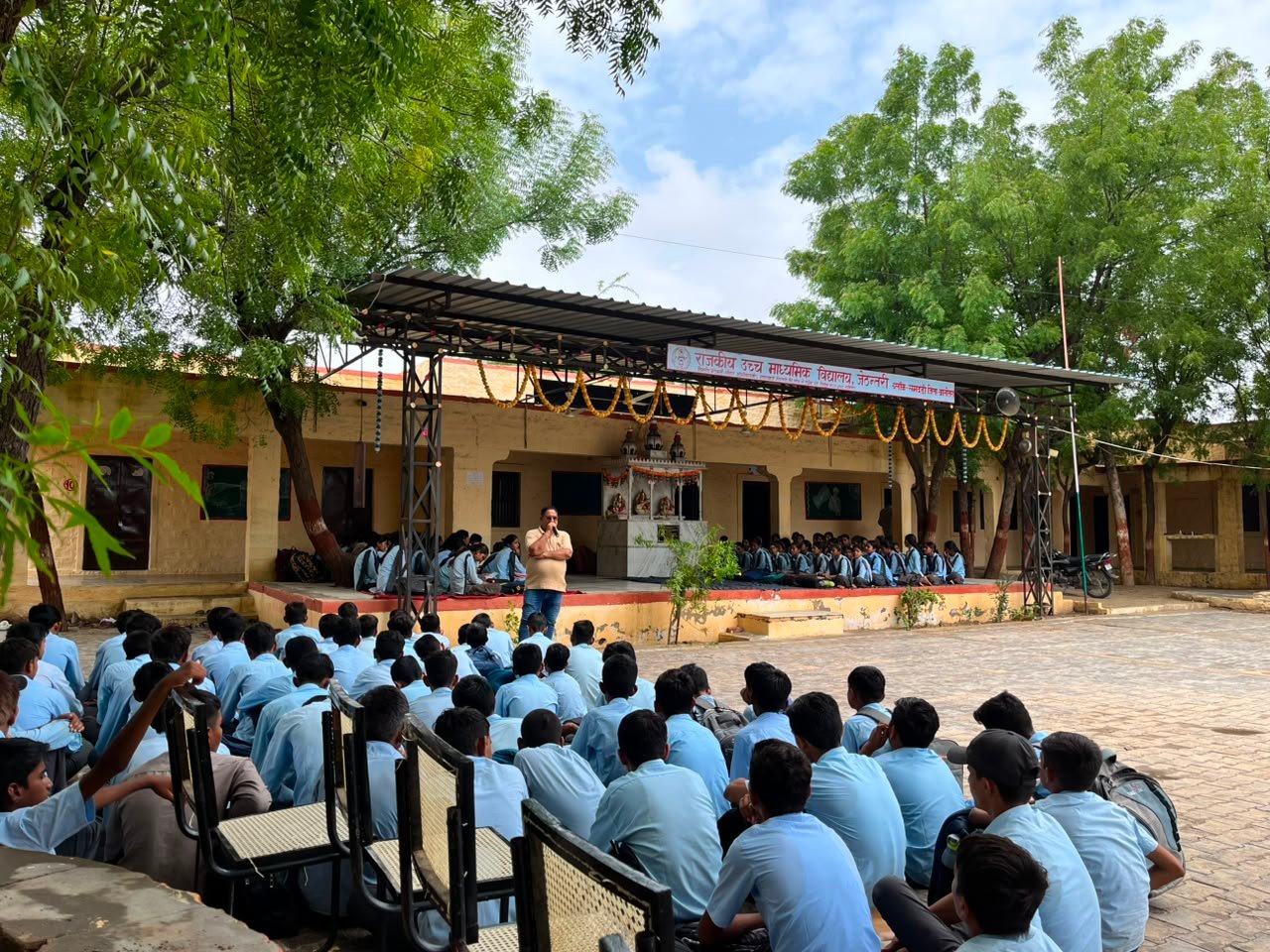
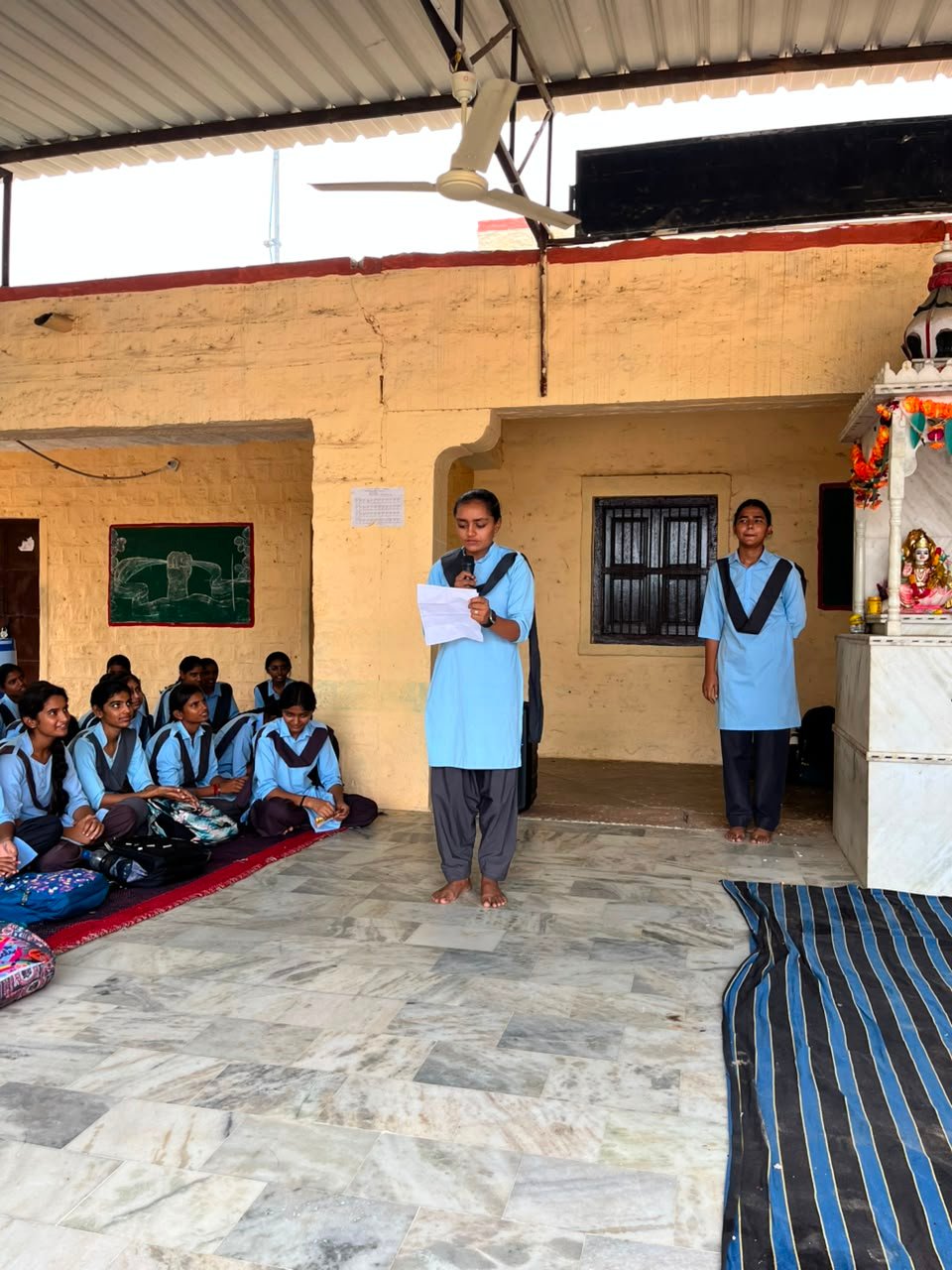
कार्यक्रम में विद्यार्थियों ने कारगिल युद्ध की पृष्ठभूमि, ऑपरेशन विजय की कठिन परिस्थितियों तथा परमवीर चक्र विजेताओं की वीर-गाथाओं पर अपने विचार प्रस्तुत किए। शिक्षक-वृन्द ने उद्बोधन में यह रेखांकित किया कि कारगिल में शहीद होने वाले अधिकांश सैनिक 20 से 30 वर्ष की आयु के युवा थे — अर्थात् आज विद्यालय में बैठे विद्यार्थियों से कुछ ही वर्ष बड़े। शहीदों के सम्मान में सभा ने मौन रखकर श्रद्धांजलि अर्पित की।
आयोजन एक दृष्टि में
- तिथि: शनिवार, 25 जुलाई 2026 (राष्ट्रीय दिवस 26 जुलाई; रविवार-अवकाश के कारण अग्रिम आयोजन)।
- स्थान: विद्यालय-प्रांगण, राउमावि जेठन्तरी (जिला बालोतरा, राजस्थान)।
- स्वरूप: विशेष प्रार्थना-सभा — विद्यार्थियों के आलेख-वाचन एवं भाषण, शिक्षकों का उद्बोधन, शहीदों की स्मृति में मौन।
- अवसर: 27वाँ कारगिल विजय दिवस — ऑपरेशन विजय की सफलता की 27वीं वर्षगाँठ (1999–2026)।
कारगिल विजय दिवस — पृष्ठभूमि से विरासत तक
हर वर्ष 26 जुलाई को भारत ‘कारगिल विजय दिवस’ मनाता है — वह दिन जब 1999 में भारतीय सशस्त्र बलों ने ऑपरेशन विजय की सफलता की घोषणा की और कारगिल–द्रास की दुर्गम चोटियों से घुसपैठियों को खदेड़कर तिरंगा फिर से लहराया। यह दिवस केवल एक सैन्य विजय का उत्सव नहीं है; यह उन 527 वीर सैनिकों की स्मृति का पर्व है जिन्होंने देश की अखंडता के लिए अपने प्राणों की आहुति दी।
एक दृष्टि में — मुख्य तथ्य
- युद्ध-काल: 3 मई – 26 जुलाई 1999 (लगभग 2 माह 3 सप्ताह), कारगिल–द्रास–बटालिक–मश्कोह क्षेत्र, लद्दाख।
- भारतीय अभियान: ऑपरेशन विजय (थलसेना) · ऑपरेशन सफेद सागर (वायुसेना, 26 मई से) · ऑपरेशन तलवार (नौसेना)।
- पाकिस्तानी अभियान का कूट-नाम: ऑपरेशन बद्र; घुसपैठ में नॉर्दर्न लाइट इन्फैंट्री के नियमित सैनिक भी शामिल।
- सैन्य-शक्ति: भारत द्वारा कुल लगभग 2,00,000 सैनिकों की गतिशीलता; कारगिल–द्रास क्षेत्र में लगभग 30,000 सैनिक। घुसपैठियों की संख्या शीर्ष पर लगभग 5,000।
- बलिदान (आधिकारिक भारतीय आँकड़े): 527 शहीद, 1,363 घायल।
- वीरता-पुरस्कार: 4 परमवीर चक्र, 9 महावीर चक्र तथा 55 वीर चक्र।
- विजय की घोषणा: 26 जुलाई 1999 — तभी से प्रतिवर्ष ‘कारगिल विजय दिवस’। इस वर्ष 26 जुलाई 2026 को 27वाँ कारगिल विजय दिवस।
पृष्ठभूमि: युद्ध की जड़ें
1998 में भारत और पाकिस्तान — दोनों देशों ने परमाणु परीक्षण किए और उपमहाद्वीप की सुरक्षा-स्थिति पूरी तरह बदल गई। तनाव घटाने के लिए फ़रवरी 1999 में प्रधानमंत्री अटल बिहारी वाजपेयी बस से लाहौर गए और लाहौर घोषणापत्र पर हस्ताक्षर हुए। किंतु उसी अवधि में पाकिस्तानी सेना ने चुपचाप नियंत्रण रेखा (LoC) पार कर कारगिल, द्रास, बटालिक और मश्कोह घाटी की ऊँची चोटियों पर कब्ज़ा करना शुरू कर दिया।
घुसपैठ का सामरिक उद्देश्य क्या था?
- श्रीनगर–लेह राष्ट्रीय राजमार्ग (NH-1A) को तोपखाने की मार में लाकर काट देना।
- लद्दाख को शेष भारत से भू-मार्ग द्वारा अलग कर देना।
- सियाचिन ग्लेशियर में भारतीय सैनिकों की रसद-व्यवस्था एवं स्थिति कमज़ोर करना।
- कश्मीर-मुद्दे का अंतरराष्ट्रीयकरण करना एवं LoC की यथास्थिति बदलना।
घुसपैठ का पता कैसे चला?
3 मई 1999 को गरखुन गाँव के स्थानीय चरवाहे ताशी नामग्याल एवं उनके साथियों ने ऊँची चोटियों पर हथियारबंद अजनबियों को देखा और सेना को सूचित किया। प्रारंभ में इसे सीमित घुसपैठ समझा गया, परंतु मई के दूसरे सप्ताह तक स्पष्ट हो गया कि यह एक सुनियोजित सैन्य अभियान है, जिसमें पाकिस्तानी नियमित सैनिक भी सम्मिलित हैं।
15 मई 1999 को कैप्टन सौरभ कालिया (4 जाट) अपने पाँच साथियों — सिपाही अर्जुन राम, भंवर लाल बगड़िया, भीका राम, मूला राम एवं नरेश सिंह — के साथ काकसर क्षेत्र में गश्त पर थे। गोला-बारूद समाप्त हो जाने पर यह दल पकड़ा गया; इनके पार्थिव शरीर 9 जून 1999 को सौंपे गए। इस दल को कारगिल युद्ध के प्रथम बलिदानी के रूप में स्मरण किया जाता है।
युद्ध का घटनाक्रम: ऑपरेशन विजय
भारत ने ऑपरेशन विजय के अंतर्गत कुल लगभग दो लाख सैनिकों को गतिशील किया, जिनमें से लगभग 30,000 सैनिक सीधे कारगिल–द्रास युद्धक्षेत्र में तैनात रहे। वायुसेना ने 26 मई 1999 से ऑपरेशन सफेद सागर आरंभ किया — 15,000 से 18,000 फीट की ऊँचाई पर लड़ा गया यह विश्व का सर्वाधिक ऊँचाई वाला वायु-अभियान माना जाता है। नौसेना ने ऑपरेशन तलवार के अंतर्गत पूर्वी एवं पश्चिमी बेड़ों के 30 से अधिक युद्धपोत अरब सागर में तैनात कर कराची एवं पोर्ट क़ासिम की ओर जाने वाले समुद्री व्यापार-मार्गों पर दबाव बना दिया।
तीनों सेनाओं का समन्वित दबाव
- थलसेना — ऑपरेशन विजय: चोटी-दर-चोटी सीधी चढ़ाई वाले आक्रमण; प्रायः रात्रि में, बर्फ़ एवं खड़ी ढलानों पर।
- वायुसेना — ऑपरेशन सफेद सागर: मिग-21, मिग-27, मिग-29 एवं मिराज-2000 की उड़ानें। 17 जून को मुंथो ढालो स्थित शत्रु के रसद-आधार तथा 24/25 जून की रात टाइगर हिल पर लेज़र-गाइडेड बम से किए गए प्रहार युद्ध की दिशा बदलने वाले सिद्ध हुए।
- नौसेना — ऑपरेशन तलवार: अरब सागर में आक्रामक गश्त; पाकिस्तान का ईंधन-भंडार कुछ ही दिनों का शेष रह जाने से आर्थिक दबाव चरम पर।
वायुसेना की क़ीमत
ऊँचाई, पतली हवा और शत्रु के कंधे-से-दागे जाने वाले स्टिंगर प्रक्षेपास्त्रों ने वायु-अभियान को अत्यंत जोखिमपूर्ण बना दिया। 27 मई को एक मिग-27 दुर्घटनाग्रस्त हुआ और फ्लाइट लेफ्टिनेंट के. नचिकेता बंदी बना लिए गए (बाद में रिहा); उसी दिन स्क्वाड्रन लीडर अजय आहूजा का मिग-21 गिराया गया और वे शहीद हुए — उन्हें वीर चक्र से सम्मानित किया गया। 28 मई को एक Mi-17 हेलिकॉप्टर स्टिंगर से गिराया गया।
भूगोल — सबसे बड़ा शत्रु
इस युद्ध की सबसे बड़ी चुनौती भूगोल थी। शत्रु 16,000 से 18,000 फीट ऊँची चोटियों पर पहले से मोर्चाबंद बैठा था, और भारतीय जवानों को सीधी खड़ी चढ़ाई करते हुए — प्रायः रात के अंधेरे में, ऊपर से हो रही गोलीबारी के बीच, 20–25 किलो का भार उठाकर, ऑक्सीजन की कमी एवं शून्य से नीचे तापमान में — आक्रमण करना था। सैन्य-सिद्धांत की दृष्टि से यह सर्वाधिक प्रतिकूल स्थिति है, और इसीलिए कारगिल की विजय विश्व-सैन्य-इतिहास में असाधारण मानी जाती है।
काल-क्रम — मई से जुलाई 1999
| तिथि | घटना |
|---|---|
| फ़रवरी 1999 | प्रधानमंत्री वाजपेयी की लाहौर बस-यात्रा एवं लाहौर घोषणापत्र। |
| 3 मई 1999 | चरवाहे ताशी नामग्याल द्वारा घुसपैठ की सूचना। |
| मई का दूसरा सप्ताह | सेना द्वारा घुसपैठ की पुष्टि; ऑपरेशन विजय का आरंभ। |
| 15 मई 1999 | कैप्टन सौरभ कालिया एवं उनके पाँच साथियों का गश्ती-दल काकसर में पकड़ा गया। |
| 22 मई 1999 | तोलोलिंग पर पहला बड़ा आक्रमण आरंभ। |
| 26 मई 1999 | वायुसेना का ऑपरेशन सफेद सागर प्रारंभ। |
| 27–28 मई 1999 | मिग-27 एवं मिग-21 की हानि (फ्ला. ले. नचिकेता बंदी, स्क्वा. ले. अजय आहूजा शहीद); Mi-17 हेलिकॉप्टर गिराया गया। |
| 13 जून 1999 | तोलोलिंग पर विजय — युद्ध का निर्णायक मोड़। नायक दिगेन्द्र कुमार (2 राजपूताना राइफ़ल्स) का असाधारण पराक्रम। |
| 17 जून 1999 | मुंथो ढालो स्थित शत्रु के प्रमुख रसद-आधार पर वायु-प्रहार। |
| 20 जून 1999 | पॉइंट 5140 पर विजय — कैप्टन विक्रम बत्रा का सफलता-संकेत: “ये दिल माँगे मोर!” |
| 24/25 जून 1999 | मिराज-2000 द्वारा टाइगर हिल पर रात्रिकालीन लेज़र-गाइडेड बम प्रहार। |
| 2/3 जुलाई 1999 | खालुबार — लेफ्टिनेंट मनोज कुमार पांडेय का अंतिम एवं निर्णायक आक्रमण। |
| 4 जुलाई 1999 | टाइगर हिल पर तिरंगा; शेष सफ़ाई-अभियान 5–8 जुलाई तक। उसी दिन पॉइंट 4875 के फ्लैट टॉप पर राइफलमैन संजय कुमार का पराक्रम। |
| 7 जुलाई 1999 | पॉइंट 4875 (अब ‘बत्रा टॉप’) पर विजय; कैप्टन विक्रम बत्रा का बलिदान। |
| 11 जुलाई 1999 | पाकिस्तानी सैनिकों की वापसी आरंभ। |
| 26 जुलाई 1999 | ऑपरेशन विजय की पूर्ण सफलता की घोषणा — कारगिल विजय दिवस। |
वीरता की गाथाएँ — चार परमवीर
इस युद्ध में चार योद्धाओं को सर्वोच्च वीरता पुरस्कार परमवीर चक्र प्रदान किया गया — दो को मरणोपरांत, और दो को जीवनकाल में।
कैप्टन विक्रम बत्रा, PVC
पॉइंट 5140 की विजय के बाद उनका सफलता-संकेत “ये दिल माँगे मोर!” राष्ट्र की स्मृति में अमर हो गया। 7 जुलाई को पॉइंट 4875 के दुर्गम मोर्चे पर एक घायल साथी अधिकारी को सुरक्षित निकालते हुए वे शहीद हुए। शत्रु ने उन्हें “शेरशाह” कहा; पॉइंट 4875 आज ‘बत्रा टॉप’ कहलाता है।
लेफ्टिनेंट मनोज कुमार पांडेय, PVC
जुबार, खालुबार सहित कई मोर्चों पर उन्होंने आगे बढ़कर नेतृत्व किया। खालुबार की चोटियों पर अंतिम आक्रमण में गंभीर रूप से घायल होने के बाद भी उन्होंने शत्रु के बंकर ध्वस्त किए और अपनी टुकड़ी का लक्ष्य पूरा कराया।
ग्रेनेडियर योगेन्द्र सिंह यादव, PVC
लगभग 16,500 फीट ऊँची सीधी बर्फ़ीली चट्टान पर रस्सियाँ लगाकर टुकड़ी का मार्ग बनाते हुए वे कई गोलियाँ झेल गए; प्लाटून-कमांडर एवं साथियों के शहीद होने के बाद भी उन्होंने शत्रु के बंकर ध्वस्त किए। मात्र 19 वर्ष की आयु में सम्मानित — युद्धकाल में परमवीर चक्र पाने वाले सबसे कम आयु के सैनिक।
राइफलमैन संजय कुमार, PVC
स्वेच्छा से अग्रणी टुकड़ी में सम्मिलित होकर उन्होंने शत्रु के मशीन-गन बंकर पर सीधा धावा बोला, घायल होने के बाद भी शत्रु की ही मशीन-गन से मोर्चा साफ़ किया और आक्रमण की धारा बनाए रखी।
नौ महावीर — दूसरा सर्वोच्च वीरता-सम्मान
महावीर चक्र से सम्मानित नौ योद्धा, जिनके पराक्रम ने कारगिल की चोटियों का भाग्य बदला —
| वीर | यूनिट | मोर्चा |
|---|---|---|
| मेजर राजेश सिंह अधिकारी* | 18 ग्रेनेडियर्स | तोलोलिंग |
| लेफ्टिनेंट बलवान सिंह | 18 ग्रेनेडियर्स | टाइगर हिल |
| मेजर विवेक गुप्ता* | 2 राजपूताना राइफ़ल्स | तोलोलिंग |
| मेजर पद्मपाणि आचार्य* | 2 राजपूताना राइफ़ल्स | तोलोलिंग / लोन हिल (28 जून) |
| कैप्टन एन. केंगुरुसे* | 2 राजपूताना राइफ़ल्स | ब्लैक रॉक / लोन हिल |
| नायक दिगेन्द्र कुमार | 2 राजपूताना राइफ़ल्स | तोलोलिंग (13 जून) |
| मेजर सोनम वांगचुक | लद्दाख स्काउट्स | चोरबतला सेक्टर |
| लेफ्टिनेंट के. क्लिफ़र्ड नोंगरम* | 12 जम्मू-कश्मीर लाइट इन्फैंट्री | पॉइंट 4812 (बटालिक) |
| कैप्टन अनुज नैयर* | 17 जाट | पॉइंट 4875 (पिम्पल कॉम्प्लेक्स) |
* मरणोपरांत। इनके अतिरिक्त 55 वीर चक्र एवं अनेक सेना-पदक प्रदान किए गए; स्क्वाड्रन लीडर अजय आहूजा एवं कैप्टन विजयंत थापर वीर चक्र से सम्मानित हुए।
राजस्थान का योगदान — गर्व का विशेष कारण
- नौ महावीर चक्रों में से चार एकमात्र 2 राजपूताना राइफ़ल्स को मिले — मेजर विवेक गुप्ता, मेजर पद्मपाणि आचार्य, कैप्टन एन. केंगुरुसे एवं नायक दिगेन्द्र कुमार।
- नायक दिगेन्द्र कुमार (जन्म: नीम का थाना, जिला सीकर, राजस्थान) ने 13 जून 1999 को तोलोलिंग पर, बाँह में गोली लगने के बाद भी एक हाथ से LMG चलाते हुए शत्रु के बंकर ध्वस्त किए। तोलोलिंग की यह विजय पूरे युद्ध का निर्णायक मोड़ बनी।
- कैप्टन सौरभ कालिया के गश्ती-दल में सम्मिलित सिपाही अर्जुन राम, भंवर लाल बगड़िया, भीका राम, मूला राम एवं नरेश सिंह — कारगिल के प्रथम बलिदानियों में गिने जाते हैं।
आँकड़ों में कारगिल
पाकिस्तान ने आधिकारिक रूप से अपने 453 सैनिकों की मृत्यु स्वीकार की; भारतीय आकलनों में यह संख्या 700 से 1,200 के बीच रखी गई है। ध्यान देने योग्य तथ्य — शहीद होने वाले अधिकांश भारतीय सैनिक 20 से 30 वर्ष की आयु के थे, इसीलिए कारगिल को प्रायः ‘युवाओं का युद्ध’ कहा जाता है।
मुख्य अवधारणाएँ: कारगिल से क्या सीखें
1. सीमित युद्ध (Limited War)
कारगिल को दो परमाणु-संपन्न देशों के बीच सीधे लड़ा गया पहला युद्ध माना जाता है, फिर भी यह सीमित दायरे में रहा। भारत ने भारी सैन्य क़ीमत चुकाकर भी नियंत्रण रेखा पार न करने का निर्णय लिया — यह संयम अंतरराष्ट्रीय समर्थन का बड़ा कारण बना और “सीमित युद्ध” की अवधारणा को सामरिक अध्ययन में स्थापित किया।
2. नियंत्रण रेखा (LoC) की पवित्रता
युद्ध ने सिद्ध किया कि LoC की यथास्थिति को बलपूर्वक बदलने का कोई भी प्रयास अस्वीकार्य है। 4 जुलाई 1999 को वाशिंगटन में हुई वार्ता के बाद अमेरिका सहित विश्व-समुदाय ने पाकिस्तान पर बिना शर्त वापसी का दबाव डाला — यह भारत की कूटनीतिक विजय थी।
3. गुप्तचर तंत्र और दूरगामी रक्षा-सुधार
घुसपैठ का समय रहते पता न चलना एक बड़ी चूक थी। 29 जुलाई 1999 को गठित कारगिल समीक्षा समिति (अध्यक्ष: के. सुब्रह्मण्यम) ने अपनी रिपोर्ट 7 जनवरी 2000 को प्रधानमंत्री को सौंपी। इसकी अनुशंसाओं पर विचार हेतु बने मंत्री-समूह (GoM) ने 26 फ़रवरी 2001 को राष्ट्रीय सुरक्षा-तंत्र के व्यापक पुनर्गठन की रिपोर्ट दी। परिणामस्वरूप —
- रक्षा गुप्तचर एजेंसी (DIA) की स्थापना — तीनों सेनाओं की संयुक्त गुप्तचर संस्था।
- राष्ट्रीय तकनीकी अनुसंधान संगठन (NTRO) — तकनीकी एवं सामरिक गुप्तचरी हेतु।
- सीमा-प्रबंधन का एकीकरण; उच्च रक्षा-प्रबंधन एवं रक्षा-खरीद प्रक्रिया में सुधार।
- चीफ़ ऑफ़ डिफ़ेंस स्टाफ़ (CDS) की संस्तुति — जो वर्षों की चर्चा के बाद 1 जनवरी 2020 को जनरल बिपिन रावत की नियुक्ति के साथ मूर्त रूप ले सकी।
4. मीडिया और जनचेतना
कारगिल भारत का पहला ‘टेलीविज़न युद्ध’ था — युद्धक्षेत्र से हुई सीधी रिपोर्टिंग ने पूरे राष्ट्र को सैनिकों के साथ भावनात्मक रूप से जोड़ दिया, शहीदों के अंतिम संस्कार राष्ट्रीय शोक-सभाएँ बन गए, और राष्ट्रीय एकता की अभूतपूर्व लहर उत्पन्न हुई।
5. कूटनीति बनाम सुरक्षा-सतर्कता
लाहौर वार्ता के कुछ ही महीनों बाद विश्वासघात हुआ — इससे यह स्थायी पाठ मिलता है कि शांति-प्रयास आवश्यक हैं, किंतु उनके साथ-साथ सुरक्षा-तैयारी में कभी शिथिलता नहीं आनी चाहिए।
6. नेतृत्व और युवा-शक्ति
कारगिल की लगभग प्रत्येक निर्णायक लड़ाई का नेतृत्व 20 से 30 वर्ष के युवा अधिकारियों एवं जवानों ने किया — कैप्टन बत्रा 24 वर्ष के, लेफ्टिनेंट पांडेय 24 वर्ष के, और ग्रेनेडियर यादव मात्र 19 वर्ष के। यह तथ्य विद्यार्थियों के लिए सबसे प्रत्यक्ष प्रेरणा है।
विरासत और स्मरण
द्रास स्थित कारगिल युद्ध स्मारक तोलोलिंग पहाड़ी की तलहटी में बना है — यहाँ से तोलोलिंग हाइट्स, टाइगर हिल और पॉइंट 4875 (‘बत्रा टॉप’) प्रत्यक्ष दिखाई देते हैं। प्रवेश-द्वार पर कवि माखनलाल चतुर्वेदी की कविता ‘पुष्प की अभिलाषा’ अंकित है; विजयपथ होकर अमर जवान ज्योति तक पहुँचा जाता है, और पीछे गुलाबी बलुआ-पत्थर की स्मृति-दीवार पर ऑपरेशन विजय के प्रत्येक शहीद का नाम अंकित है। प्रतिवर्ष 26 जुलाई को यह स्थल राष्ट्रीय श्रद्धांजलि का केंद्र बनता है। नई दिल्ली का राष्ट्रीय समर स्मारक (लोकार्पण: 25 फ़रवरी 2019) भी इन बलिदानों की गौरव-गाथा कहता है।
“या तो मैं तिरंगा फहराकर वापस आऊँगा, या उसमें लिपटकर आऊँगा — लेकिन आऊँगा ज़रूर।”
— कैप्टन विक्रम बत्रा, परमवीर चक्र (1974–1999)विद्यार्थियों के लिए — हम क्या कर सकते हैं?
- प्रार्थना-सभा में कारगिल के चार परमवीरों पर सामूहिक वाचन एवं शहीदों की स्मृति में मौन।
- निबंध एवं भाषण-प्रतियोगिता — विषय: “कारगिल — भूगोल के विरुद्ध जीता गया युद्ध”।
- पोस्टर एवं मानचित्र-कार्य — कारगिल, द्रास, बटालिक, मश्कोह घाटी, NH-1A एवं LoC को नक़्शे पर अंकित करना (भूगोल-विषय से समन्वय)।
- पत्र-लेखन — एक सैनिक अथवा शहीद-परिवार को पत्र; कक्षा में वाचन।
- ‘पुष्प की अभिलाषा’ का सस्वर पाठ एवं देशभक्ति-गीतों की प्रस्तुति।
- करियर-सत्र: NDA, CDS, अग्निवीर एवं सैनिक-स्कूल प्रवेश की जानकारी — कक्षा 10–12 के विद्यार्थियों हेतु।
परीक्षा-उपयोगी बिंदु (Quick Revision)
- कारगिल युद्ध: 3 मई – 26 जुलाई 1999 · भारतीय अभियान: ऑपरेशन विजय।
- वायुसेना: ऑपरेशन सफेद सागर (26 मई से) · नौसेना: ऑपरेशन तलवार।
- पाकिस्तानी कूट-नाम: ऑपरेशन बद्र · घुसपैठ-बल: नॉर्दर्न लाइट इन्फैंट्री।
- निर्णायक लड़ाइयाँ: तोलोलिंग (13 जून) · पॉइंट 5140 (20 जून) · टाइगर हिल (4 जुलाई) · पॉइंट 4875 / बत्रा टॉप (7 जुलाई)।
- 4 परमवीर चक्र: कै. विक्रम बत्रा*, ले. मनोज कुमार पांडेय*, ग्रे. योगेन्द्र सिंह यादव, राइ. संजय कुमार (*मरणोपरांत)।
- समीक्षा समिति: कारगिल समीक्षा समिति — अध्यक्ष के. सुब्रह्मण्यम (रिपोर्ट: 7 जनवरी 2000)।
- स्मारक: कारगिल युद्ध स्मारक, द्रास (लद्दाख) — तोलोलिंग की तलहटी में।
- प्रधानमंत्री: अटल बिहारी वाजपेयी · थलसेनाध्यक्ष: जनरल वी. पी. मलिक।
निष्कर्ष
कारगिल विजय दिवस हमें स्मरण कराता है कि स्वतंत्रता और सुरक्षा का मूल्य हर पीढ़ी को चुकाना पड़ता है। जो चोटियाँ नक़्शे पर केवल संख्याएँ थीं — 5140, 4875, 4812 — वे आज भारतीय शौर्य के प्रतीक-चिह्न हैं, क्योंकि उन्हें जीतने के लिए किसी ने अपना सब कुछ दे दिया। शहीदों के प्रति सच्ची श्रद्धांजलि यही है कि हम एक शिक्षित, एकजुट और सशक्त भारत का निर्माण करें — वही भारत, जिसके लिए वे लड़े और जिसके लिए वे अमर हो गए।
स्रोत एवं संदर्भ
- भारतीय सेना / रक्षा मंत्रालय, भारत सरकार — ऑपरेशन विजय एवं कारगिल विजय दिवस से संबंधित आधिकारिक विवरण एवं वीरता-पुरस्कार उद्धरण (गैलेंट्री अवार्ड्स पोर्टल: gallantryawards.gov.in)।
- भारतीय वायुसेना — ऑपरेशन सफेद सागर (26 मई – 26 जुलाई 1999) संबंधी विवरण।
- कारगिल समीक्षा समिति रिपोर्ट (2000) एवं मंत्री-समूह रिपोर्ट, ‘Reforming the National Security System’ (फ़रवरी 2001) — PIB अभिलेखागार।
- कारगिल युद्ध स्मारक, द्रास — स्मारक-स्थल एवं स्मृति-दीवार संबंधी विवरण।
- आधिकारिक भारतीय हानि-आँकड़े: 527 शहीद, 1,363 घायल। वीरता-पुरस्कार: 4 परमवीर चक्र, 9 महावीर चक्र, 55 वीर चक्र (कुछ संकलनों में तीनों सेनाओं को मिलाकर महावीर चक्रों की संख्या भिन्न भी दी जाती है)।
संबंधित सामग्री
At school — observed a day early, in full measure
Because 26 July 2026 falls on a Sunday, the school is closed on the day itself — so Government Senior Secondary School, Jethantri observed the 27th Kargil Vijay Diwas a day in advance, on Saturday, 25 July 2026, in a special morning-assembly session. Students of every class and the entire teaching staff gathered in the school courtyard to remember the martyrs of the 1999 Kargil War.
Students spoke on the background of the war, the punishing conditions of Operation Vijay, and the stories of the four Param Vir Chakra awardees. In their address, the teachers underlined a fact that lands closest to home: most of the soldiers who fell in Kargil were between 20 and 30 years old — only a few years older than the students seated in that courtyard. The assembly then stood in silence in tribute to the fallen.
The observance at a glance
- Date: Saturday, 25 July 2026 (the national day is 26 July; observed a day early as it is a Sunday holiday).
- Venue: School courtyard, GSSS Jethantri (District Balotra, Rajasthan).
- Programme: Special assembly — student readings and speeches, an address by the teachers, and silence in memory of the martyrs.
- Occasion: the 27th Kargil Vijay Diwas — 27 years since the success of Operation Vijay (1999–2026).
Kargil Vijay Diwas — from background to legacy
Every year on 26 July, India observes Kargil Vijay Diwas — the day in 1999 when the Indian Armed Forces declared the success of Operation Vijay, having evicted the intruders from the forbidding heights of Kargil and Dras and raised the tricolour there once more. It is not merely the celebration of a military victory; it is a day of remembrance for the 527 soldiers who gave their lives for the country's territorial integrity.
At a glance — key facts
- Duration: 3 May – 26 July 1999 (about two months and three weeks), in the Kargil–Dras–Batalik–Mushkoh sector of Ladakh.
- Indian operations: Operation Vijay (Army) · Operation Safed Sagar (Air Force, from 26 May) · Operation Talwar (Navy).
- Pakistani codename: Operation Badr; the intrusion included regular troops of the Northern Light Infantry.
- Forces: India mobilised about 200,000 troops overall, with roughly 30,000 deployed in the Kargil–Dras sector. The intruders numbered about 5,000 at their peak.
- Cost (official Indian figures): 527 killed, 1,363 wounded.
- Gallantry awards: 4 Param Vir Chakras, 9 Maha Vir Chakras and 55 Vir Chakras.
- Victory declared: 26 July 1999 — observed every year since. This year, 26 July 2026, marks the 27th Kargil Vijay Diwas.
Background: the roots of the war
In 1998, both India and Pakistan carried out nuclear tests, and the security calculus of the subcontinent changed entirely. To reduce tension, Prime Minister Atal Bihari Vajpayee travelled to Lahore by bus in February 1999, and the Lahore Declaration was signed. Yet in that very period the Pakistan Army quietly crossed the Line of Control (LoC) and began occupying the high ridges above Kargil, Dras, Batalik and the Mushkoh valley.
What was the intrusion meant to achieve?
- Bring the Srinagar–Leh national highway (NH-1A) under artillery fire and cut it.
- Sever Ladakh from the rest of India by road.
- Weaken India's logistics and position on the Siachen Glacier.
- Internationalise the Kashmir issue and alter the status quo along the LoC.
How the intrusion was discovered
On 3 May 1999, Tashi Namgyal, a shepherd from the village of Garkhun, and his companions spotted armed strangers on the heights and reported it to the Army. It was first taken for a limited infiltration, but by the second week of May it was clear that this was a planned military operation involving Pakistani regulars.
On 15 May 1999, Captain Saurabh Kalia (4 JAT) was on patrol in the Kaksar sector with five soldiers — Sepoys Arjun Ram, Bhanwar Lal Bagaria, Bhika Ram, Moola Ram and Naresh Singh. Out of ammunition, the patrol was captured; their bodies were handed over on 9 June 1999. They are remembered as the first martyrs of the Kargil War.
The course of the war: Operation Vijay
Under Operation Vijay, India mobilised some two hundred thousand troops, of whom about 30,000 fought in the Kargil–Dras theatre itself. From 26 May 1999, the Air Force launched Operation Safed Sagar — flown against targets at 15,000 to 18,000 feet, it is regarded as the highest-altitude air campaign ever conducted. Under Operation Talwar, the Navy deployed more than 30 warships of the Eastern and Western Fleets into the Arabian Sea, squeezing the sea lanes to Karachi and Port Qasim.
Coordinated pressure from all three services
- Army — Operation Vijay: peak-by-peak uphill assaults, mostly by night, over ice and near-vertical slopes.
- Air Force — Operation Safed Sagar: MiG-21, MiG-27, MiG-29 and Mirage 2000 sorties. The strike on the enemy's main supply base at Muntho Dhalo on 17 June, and the laser-guided bomb strike on Tiger Hill on the night of 24/25 June, proved decisive turning points.
- Navy — Operation Talwar: aggressive patrolling in the Arabian Sea; with fuel reserves down to a few days, the economic pressure on Pakistan became acute.
What the air campaign cost
Altitude, thin air and the enemy's shoulder-fired Stinger missiles made the air campaign extremely hazardous. On 27 May a MiG-27 was lost and Flt Lt K. Nachiketa was taken prisoner (later released); the same day Squadron Leader Ajay Ahuja's MiG-21 was shot down and he was killed — he was awarded the Vir Chakra. On 28 May, an Mi-17 helicopter was brought down by a Stinger.
Geography — the toughest adversary
The hardest opponent in this war was the terrain. The enemy sat dug in on ridges 16,000 to 18,000 feet high, while Indian soldiers had to attack straight up the slope — usually in darkness, under fire from above, carrying 20–25 kg loads, short of oxygen and in sub-zero cold. In military terms these are the most unfavourable conditions imaginable, which is precisely why the Kargil victory is regarded as extraordinary in world military history.
Timeline — May to July 1999
| Date | Event |
|---|---|
| February 1999 | PM Vajpayee's Lahore bus journey and the Lahore Declaration. |
| 3 May 1999 | Shepherd Tashi Namgyal reports the intrusion. |
| Second week of May | The Army confirms the intrusion; Operation Vijay begins. |
| 15 May 1999 | Capt Saurabh Kalia's six-man patrol is captured in the Kaksar sector. |
| 22 May 1999 | First major assault on Tololing begins. |
| 26 May 1999 | The Air Force launches Operation Safed Sagar. |
| 27–28 May 1999 | MiG-27 and MiG-21 lost (Flt Lt Nachiketa captured, Sqn Ldr Ajay Ahuja killed); an Mi-17 is shot down. |
| 13 June 1999 | Tololing captured — the decisive turn of the war. Naik Digendra Kumar (2 Rajputana Rifles) fights with exceptional valour. |
| 17 June 1999 | Air strike on the enemy's main supply base at Muntho Dhalo. |
| 20 June 1999 | Point 5140 captured — Capt Vikram Batra's success signal: "Yeh Dil Maange More!" |
| 24/25 June 1999 | Mirage 2000s deliver a night laser-guided bomb strike on Tiger Hill. |
| 2/3 July 1999 | Khalubar — Lt Manoj Kumar Pandey's final, decisive assault. |
| 4 July 1999 | The tricolour on Tiger Hill; mopping-up continues to 8 July. The same day, Rifleman Sanjay Kumar's action on the Flat Top of Point 4875. |
| 7 July 1999 | Point 4875 (now 'Batra Top') taken; Capt Vikram Batra is killed in action. |
| 11 July 1999 | Pakistani troops begin withdrawing. |
| 26 July 1999 | Operation Vijay declared a complete success — Kargil Vijay Diwas. |
Stories of valour — the four Param Virs
Four soldiers received the Param Vir Chakra, India's highest award for gallantry — two posthumously, and two who lived to wear it.
Captain Vikram Batra, PVC
After taking Point 5140, his success signal — "Yeh Dil Maange More!" — passed into the nation's memory. On 7 July, on the murderous slopes of Point 4875, he was killed while pulling an injured fellow officer to safety. The enemy called him "Sher Shah"; Point 4875 is known today as Batra Top.
Lieutenant Manoj Kumar Pandey, PVC
He led from the front at Jubar, Khalubar and other objectives. In the final assault on the Khalubar heights, though grievously wounded, he silenced the enemy bunkers and saw his platoon's task through.
Grenadier Yogendra Singh Yadav, PVC
Fixing ropes up a sheer, snow-covered cliff at some 16,500 feet to open the route for his platoon, he took multiple bullets; after his platoon commander and comrades fell, he still cleared the enemy bunkers. Decorated at just 19, he is the youngest wartime recipient of the Param Vir Chakra.
Rifleman Sanjay Kumar, PVC
Volunteering for the leading team, he charged an enemy machine-gun bunker head-on and, though wounded, turned the enemy's own gun on the next position — keeping the momentum of the assault alive.
Nine Maha Virs — the second-highest gallantry award
| Awardee | Unit | Objective |
|---|---|---|
| Major Rajesh Singh Adhikari* | 18 Grenadiers | Tololing |
| Lieutenant Balwan Singh | 18 Grenadiers | Tiger Hill |
| Major Vivek Gupta* | 2 Rajputana Rifles | Tololing |
| Major Padmapani Acharya* | 2 Rajputana Rifles | Tololing / Lone Hill (28 June) |
| Captain N. Kenguruse* | 2 Rajputana Rifles | Black Rock / Lone Hill |
| Naik Digendra Kumar | 2 Rajputana Rifles | Tololing (13 June) |
| Major Sonam Wangchuk | Ladakh Scouts | Chorbatla sector |
| Lieutenant K. Clifford Nongrum* | 12 JAK LI | Point 4812 (Batalik) |
| Captain Anuj Nayyar* | 17 JAT | Point 4875 (Pimple complex) |
* Posthumous. In addition, 55 Vir Chakras and many Sena Medals were awarded; Squadron Leader Ajay Ahuja and Captain Vijyant Thapar were among the Vir Chakra recipients.
Rajasthan's share — a particular reason for pride
- Four of the nine Maha Vir Chakras went to a single battalion — 2 Rajputana Rifles: Major Vivek Gupta, Major Padmapani Acharya, Captain N. Kenguruse and Naik Digendra Kumar.
- Naik Digendra Kumar (born in Neem Ka Thana, Sikar district, Rajasthan) fought at Tololing on 13 June 1999, firing his LMG one-handed after a bullet struck his arm and destroying enemy bunkers. That victory at Tololing turned the whole war.
- Sepoys Arjun Ram, Bhanwar Lal Bagaria, Bhika Ram, Moola Ram and Naresh Singh of Capt Saurabh Kalia's patrol are counted among Kargil's first martyrs.
Kargil in numbers
Pakistan officially acknowledged 453 of its soldiers dead; Indian estimates place the figure between 700 and 1,200. One fact deserves particular notice — most of the Indian soldiers who fell were between 20 and 30 years old, which is why Kargil is often called "the young men's war".
Key concepts: what Kargil teaches
1. Limited war
Kargil is regarded as the first war fought directly between two nuclear-armed states, and yet it stayed limited. Even at a heavy military cost, India chose not to cross the Line of Control — a restraint that won it broad international support and established "limited war" as a category in strategic studies.
2. The sanctity of the Line of Control
The war demonstrated that no attempt to alter the LoC by force is acceptable. After the Washington talks of 4 July 1999, the international community — the United States included — pressed Pakistan to withdraw unconditionally. That was India's diplomatic victory.
3. Intelligence failure and lasting defence reform
Not detecting the intrusion in time was a serious lapse. The Kargil Review Committee, constituted on 29 July 1999 under K. Subrahmanyam, submitted its report to the Prime Minister on 7 January 2000. A Group of Ministers set up to consider its recommendations reported a comprehensive overhaul of the national security system on 26 February 2001. The consequences included —
- the Defence Intelligence Agency (DIA) — a joint tri-service intelligence organisation;
- the National Technical Research Organisation (NTRO) for technical and strategic intelligence;
- integrated border management, and reform of higher defence management and procurement;
- the recommendation for a Chief of Defence Staff (CDS) — realised, after years of debate, with General Bipin Rawat's appointment on 1 January 2020.
4. Media and public consciousness
Kargil was India's first "television war". Live reporting from the battlefield bound the whole nation emotionally to its soldiers, turned the funerals of the fallen into national acts of mourning, and produced an unprecedented wave of unity.
5. Diplomacy versus vigilance
The betrayal came only months after the Lahore talks — a permanent lesson that peace efforts are necessary, but must never be accompanied by any slackening of defence preparedness.
6. Leadership and the strength of the young
Almost every decisive battle in Kargil was led by officers and soldiers in their twenties — Captain Batra was 24, Lieutenant Pandey 24, and Grenadier Yadav just 19. For students, no fact in this story is more directly instructive.
Legacy and remembrance
The Kargil War Memorial at Dras stands at the foot of Tololing hill, with Tololing Heights, Tiger Hill and Point 4875 (Batra Top) visible from the site. Its gateway carries "Pushp Ki Abhilasha", the poem by Makhanlal Chaturvedi; the Vijaypath leads to the Amar Jawan Jyoti, and behind it a pink sandstone memorial wall bears the name of every soldier who fell in Operation Vijay. Each 26 July, this is the focal point of the nation's tribute. The National War Memorial in New Delhi (inaugurated 25 February 2019) tells the same story of sacrifice.
"Either I will come back after hoisting the tricolour, or I will come back wrapped in it — but I will come back for sure."
— Captain Vikram Batra, Param Vir Chakra (1974–1999)For our students — what we can do
- A collective reading on Kargil's four Param Virs at the morning assembly, followed by silence in memory of the martyrs.
- Essay and speech competitions on "Kargil — the war won against geography".
- Poster and map work — marking Kargil, Dras, Batalik, the Mushkoh valley, NH-1A and the LoC on a map (in coordination with Geography).
- Letter writing — a letter to a serving soldier or to a martyr's family, read out in class.
- A recitation of "Pushp Ki Abhilasha" and patriotic-song presentations.
- Careers session: NDA, CDS, Agniveer and Sainik School entry pathways — for Classes 10–12.
Quick revision
- Kargil War: 3 May – 26 July 1999 · Indian operation: Operation Vijay.
- Air Force: Operation Safed Sagar (from 26 May) · Navy: Operation Talwar.
- Pakistani codename: Operation Badr · intruding force: Northern Light Infantry.
- Decisive battles: Tololing (13 June) · Point 5140 (20 June) · Tiger Hill (4 July) · Point 4875 / Batra Top (7 July).
- 4 Param Vir Chakras: Capt Vikram Batra*, Lt Manoj Kumar Pandey*, Gren Yogendra Singh Yadav, Rfn Sanjay Kumar (*posthumous).
- Review committee: the Kargil Review Committee under K. Subrahmanyam (report: 7 January 2000).
- Memorial: Kargil War Memorial, Dras (Ladakh) — at the foot of Tololing.
- Prime Minister: Atal Bihari Vajpayee · Chief of Army Staff: General V. P. Malik.
Conclusion
Kargil Vijay Diwas reminds us that the price of freedom and security is paid afresh by every generation. Peaks that were only numbers on a map — 5140, 4875, 4812 — are today emblems of Indian courage, because taking them cost someone everything. The truest tribute to the martyrs is to build an educated, united and strong India — the very India they fought for, and for which they became immortal.
Sources & references
- Indian Army / Ministry of Defence, Government of India — official accounts of Operation Vijay and Kargil Vijay Diwas, and gallantry-award citations (gallantryawards.gov.in).
- Indian Air Force — Operation Safed Sagar (26 May – 26 July 1999).
- Kargil Review Committee Report (2000) and the Group of Ministers report, "Reforming the National Security System" (February 2001) — PIB archives.
- Kargil War Memorial, Dras — memorial site and memorial-wall details.
- Official Indian casualty figures: 527 killed, 1,363 wounded. Gallantry awards: 4 Param Vir Chakras, 9 Maha Vir Chakras, 55 Vir Chakras (some tri-service compilations give a slightly different Maha Vir Chakra count).